
You don’t need to create to be an artist. There are enough art forms, like process art or performance art, that allow you to creatively express yourself without having to be a painter or sculptor in the classical sense. But what about the art of living? How can we find a sense of beauty, expression, meaning or a sense of self in the mundanity of modern-day life, with a 9 to 5 job, that is the same every day? Perfect Days by Wim Wenders manages to show us how. It’s a meditation on beauty and simplicity. A reminder of the importance of taking a break and paying attention to the small things around us. It rejects grand narratives and sensational excitement. Polite and understated, Perfect Days is as calming as it is instructive.
Hirayama is 60 years old, lives in a small apartment and cleans toilets for a living. He wakes up every morning before the sun comes up, tends his plants, drinks coffee from a vending machine and then drives to work. He cleans toilets for the whole day, drives homes, reads and then goes to sleep. This repeats for every day. While this might sound depressing it is deeply relaxing to watch.
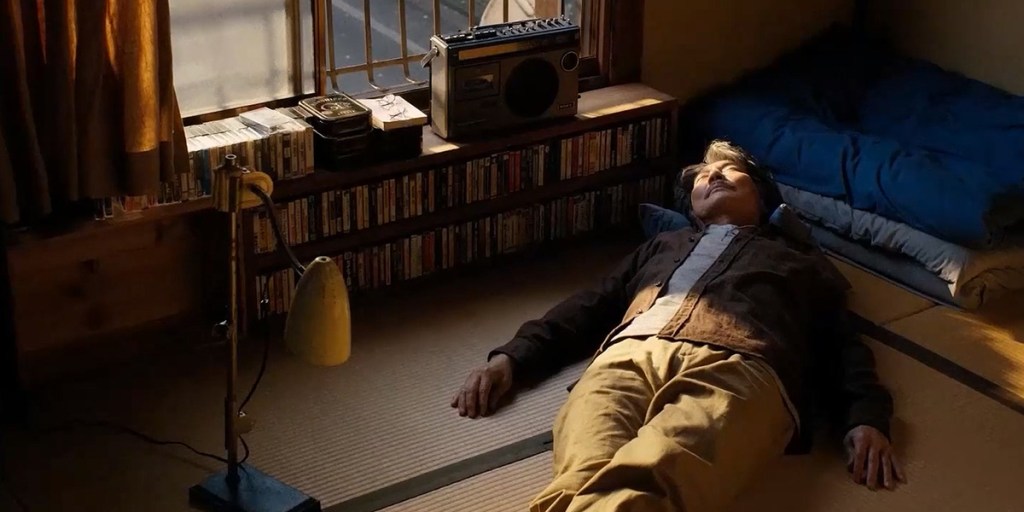
As we follow Hirayama on every step, his methodological routine builds a narrative rhythm that functions with minimal dialogue. Conversations are sparse, and communicate more with what remains unsaid. This episodic rhythm gets occasionally disrupted, whether it is his niece suddenly appearing in front of his door, smaller interactions with his coworker, or brief hints about his past. These interruptions offer us an idea of the deeper emotional undercurrent, that is, Hirayama’s inner life. Although he never voices his thoughts and feelings, we can catch a glimpse of his inner world when he listens to classic rock on old cassette tapes.
Hirayama’s unhurried attitude on life is also reflected in the film’s visual language. Wenders employs slow, static shots that allow us to immerse ourselves in Hirayama’s world. The shot composition is always precisely balanced, often playing with contrasts or symmetry, adding to the calming presence that this movie radiates.
The film’s setting is essential here. Wenders’ love for Tokyo shines through every scene. The city does not come across as a loud metropolis shrouded in anonymity and distress, but rather as a place of calming rhythms. Especially as we spent most of our time in the more intimate sides of Tokyo. Speaking of which, it is important to mention here that the public toilets are beautifully designed and stand out architecturally within the parks and squares of the city. None of the scenes are shot in a studio; everything is filmed on location, and we spend most of our time outside. The film emphasises natural light, and the soft glow of Tokyo at dusk and dawn is a beautiful sight to see.
This beauty does not go unnoticed. Hirayama embraces small moments, like light shining through the trees, and captures the ephemeral beauty with his point and shoot camera. Wenders makes sure to highlight these small everyday actions, like cautiously folding a towel, attentively watering a plant or diligently cleaning a mirror. Hirayama’s careful nature elevates even the smallest actions into meaningful gestures.
Perfect Days is my personal reminder to embrace the small, everyday moments in life. That there is freedom in simplicity and that fulfilment does not need to come from big achievements. Perfect Days is a life-affirming masterpiece that brings a content acceptance to the fleeting nature of life. It shows us how to master the art of life. How to resist distractions and indifference. It encourages us to be artists, it encourages us to live artistically.
 peertopeer.blog
Leave a comment